
Appliance Showroom Tech Integration
Watch Our Podcast:
How do presence sensors transform the traditional appliance shopping experience?
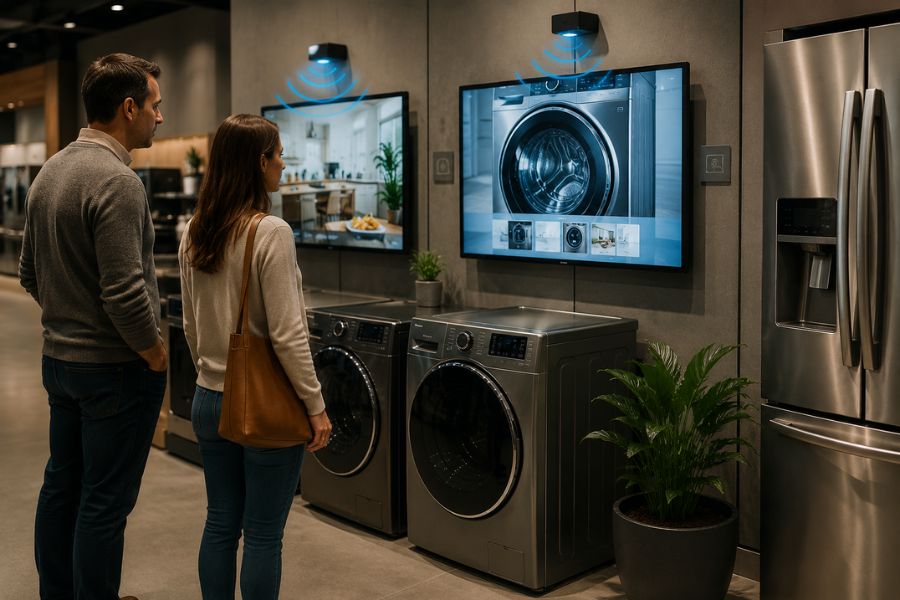
Contextual Information on Demand
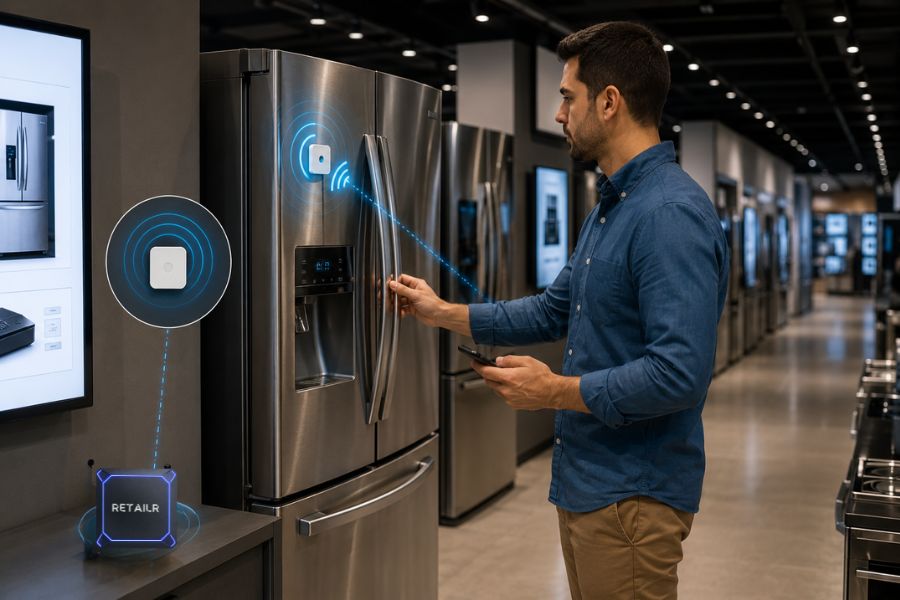
As a customer approaches a specific appliance, such as a washing machine, a nearby screen can instantly switch from a general brand video to a detailed product page highlighting the features, specifications, and user reviews for that exact model.
Smart Comparisons and Lifestyle Context
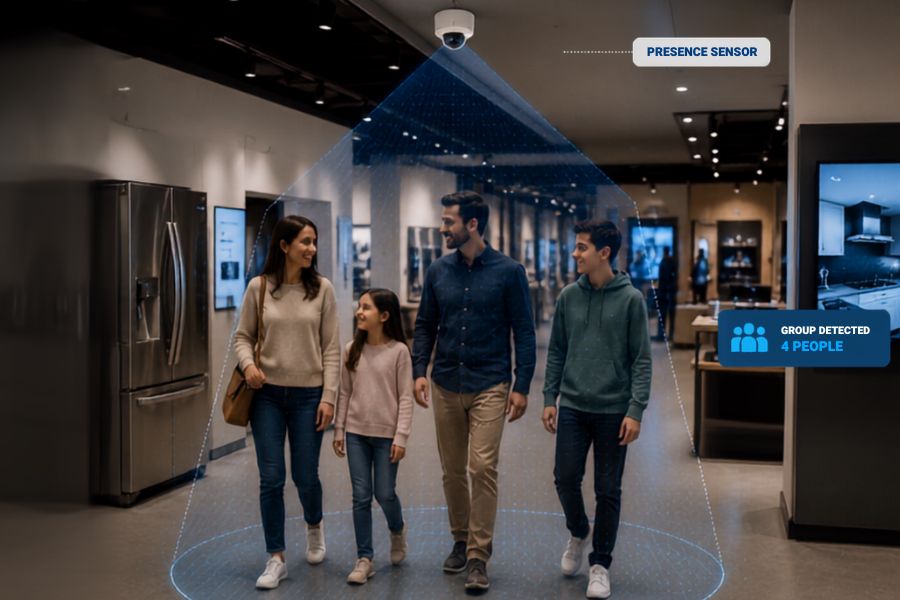
If a shopper is standing between two similar refrigerators, the system can automatically display a side-by-side comparison chart of their features and prices. It can also detect a family near kitchen appliances and show targeted lifestyle content, such as recipes or videos of the appliances in a home setting.
Targeted Promotions
By measuring a customer's "dwell time" (how long they stand near a specific product), the sensors can trigger the digital signage to subtly display relevant financing options or current sales promotions.
Deep Personalization
When integrated with a store app or loyalty program, the underlying AI can recognize returning shoppers and tailor the digital content based on their previous browsing history or stated preferences.
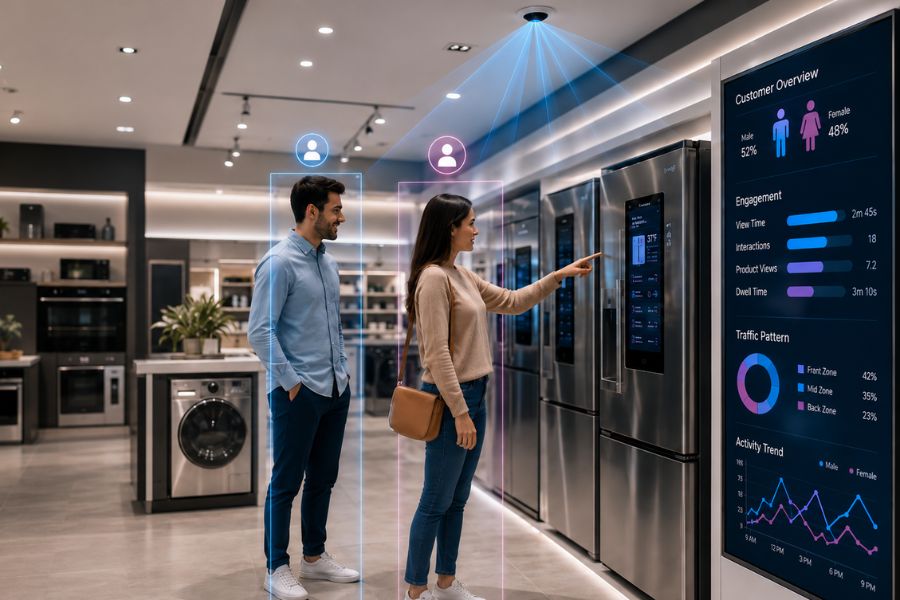
What kind of demographic information do depth sensors collect?
How does AI optimize the content displayed on signage?
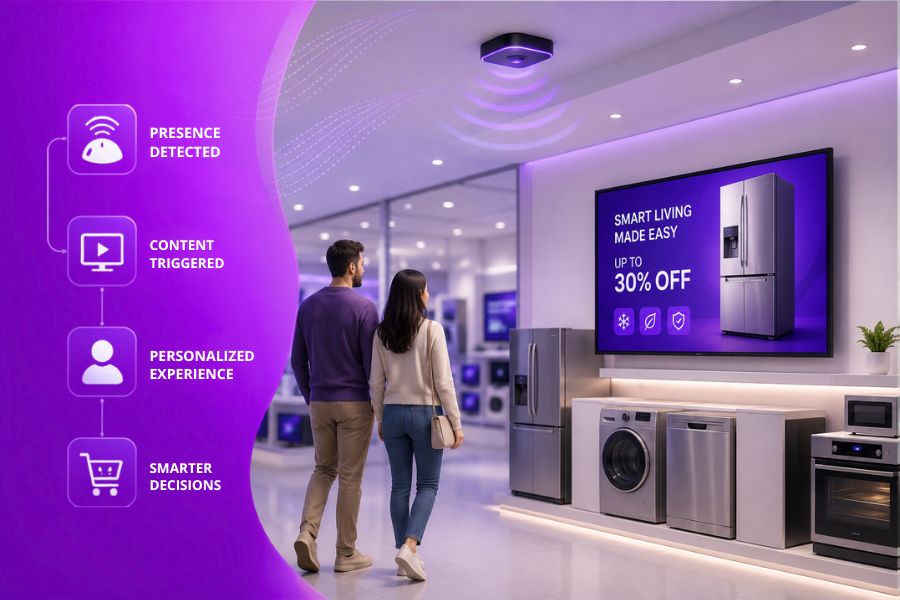
- Intelligent Content Selection: Intelligent Content Selection: The AI manages a comprehensive library of digital content that is tagged by product, category, features, and target customer segments. By analyzing incoming data streams from presence sensors—such as a customer's location or dwell time—the AI automatically selects and triggers the most relevant information to display on the nearest screen.
- Continuous Learning and Adjustment:The system constantly evaluates the effectiveness of its signage by tracking metrics like interaction rates, how long a customer stays near a product, and ultimate conversion rates. By analyzing this data, the AI learns which content works best for specific customer behaviors and dynamically adjusts its content strategy over time to maximize engagement and sales.
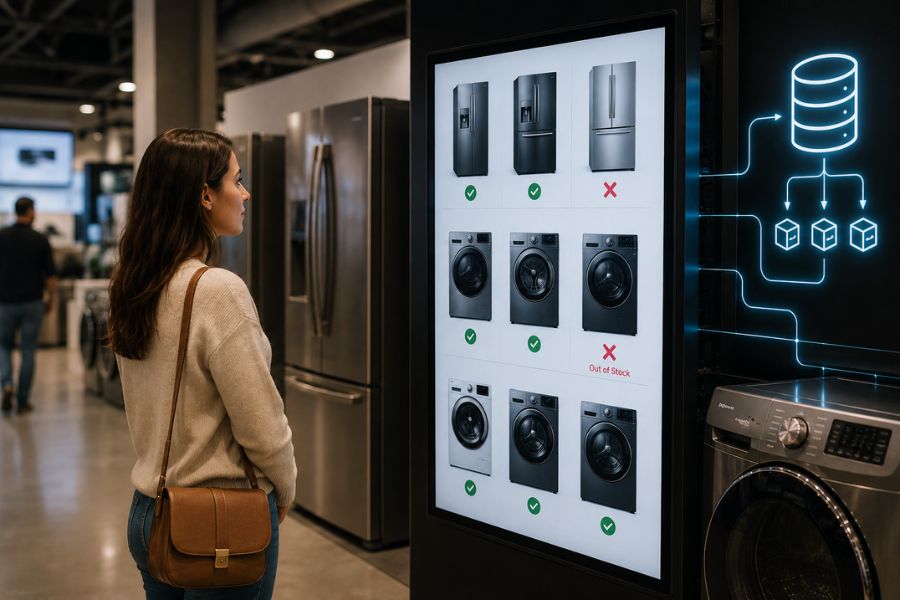
Real-time Inventory Integration
The AI can connect directly with the store's inventory management systems to ensure it avoids promoting items that are currently out of stock.
Holistic Personalization
By integrating with customer relationship management (CRM) systems and loyalty programs, the AI can recognize opted-in, returning customers. It uses this integration to display highly tailored content based on the individual's past browsing history or stated preferences.
How does AI analyze foot traffic patterns across the showroom?
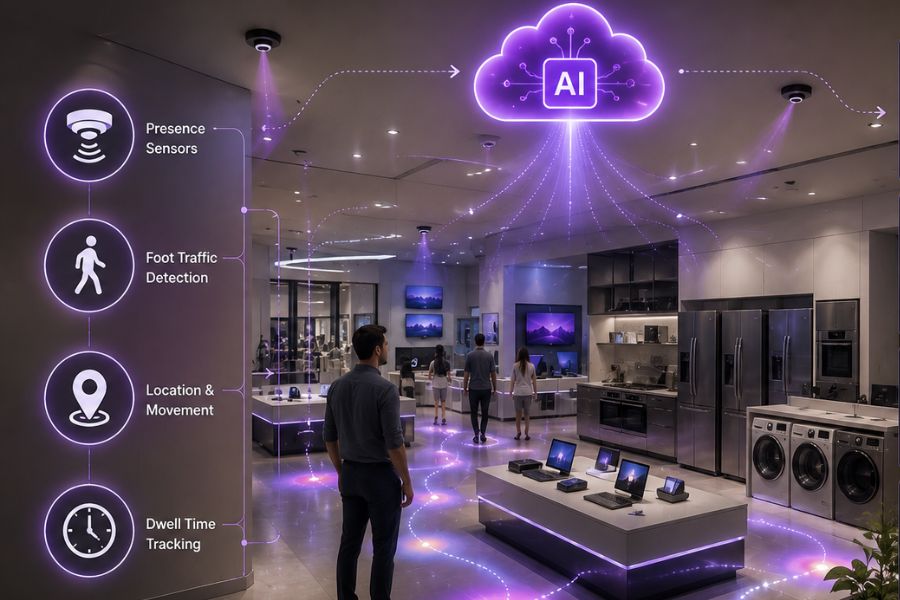
What kind of hardware is needed for this AI?
To create this dynamic showroom experience, the AI requires the following hardware components:
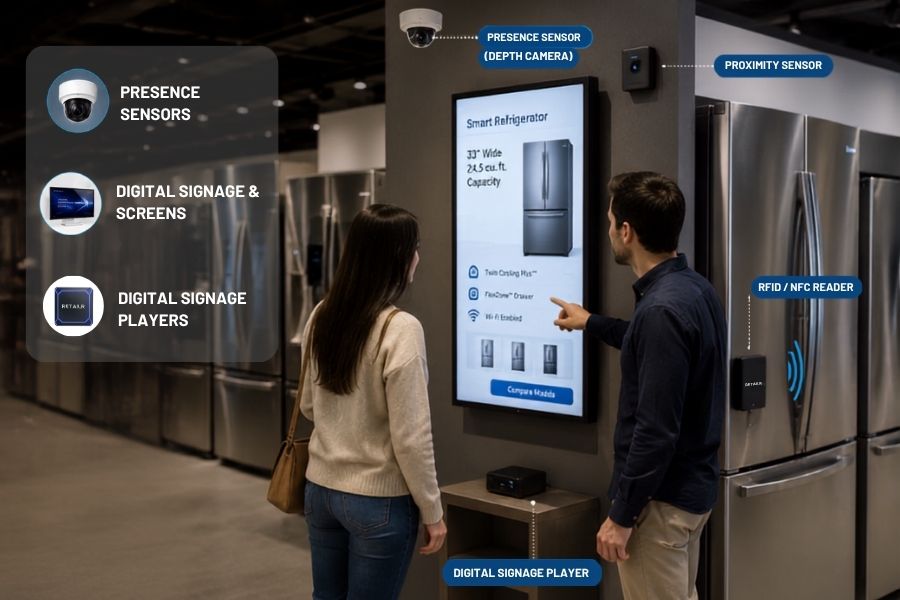
Presence Sensors:
- Proximity sensors to detect when a customer is within a specific range of an appliance.
- Depth sensors or cameras equipped with computer vision to track customer presence and dwell time.
- RFID or NFC readers that detect when a customer interacts with corresponding tags placed on the appliances or displays.
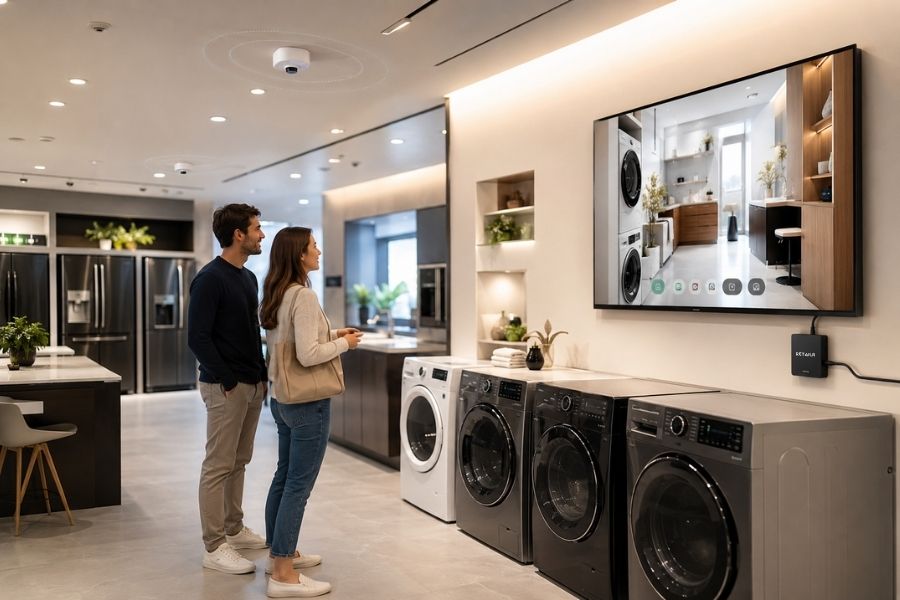
Digital Signage and Screens
Physical displays placed near the appliances to show dynamic content, videos, and product comparisons to the shopper.
Digital Signage Players
The specific hardware devices connected to the screens that receive commands from the AI platform and execute the display of the selected content.
How do sensors detect how many people are in groups?
How do RFID and NFC tags track product interaction?
How does AI prevent showing out-of-stock items?