RFID Smart Fitting Rooms
The fitting room knows the garment. Not the person.
RFID tags tell the screen exactly what a shopper carried in — sizes, colours, styling, staff requests. No camera in the room, ever. And when what goes in doesn't match what comes out, your team knows within seconds.
RFID + presence sensing · zero cameras · alerts and loss reports built in
A fitting room is the one place a camera can never go.
So we didn't put one there. The system reads tags and occupancy — nothing else. That's what makes it deployable in a changing room at all.
No camera hardware
There is no lens in the room to be hacked, misconfigured or complained about.
No images to store
Nothing to retain, breach or produce in a subject access request.
Easy to explain
Post a sign that says what's sensed. Staff and shoppers understand it in one sentence.
Works where cameras can't
Changing rooms, clinics and any space where imaging isn't an option.
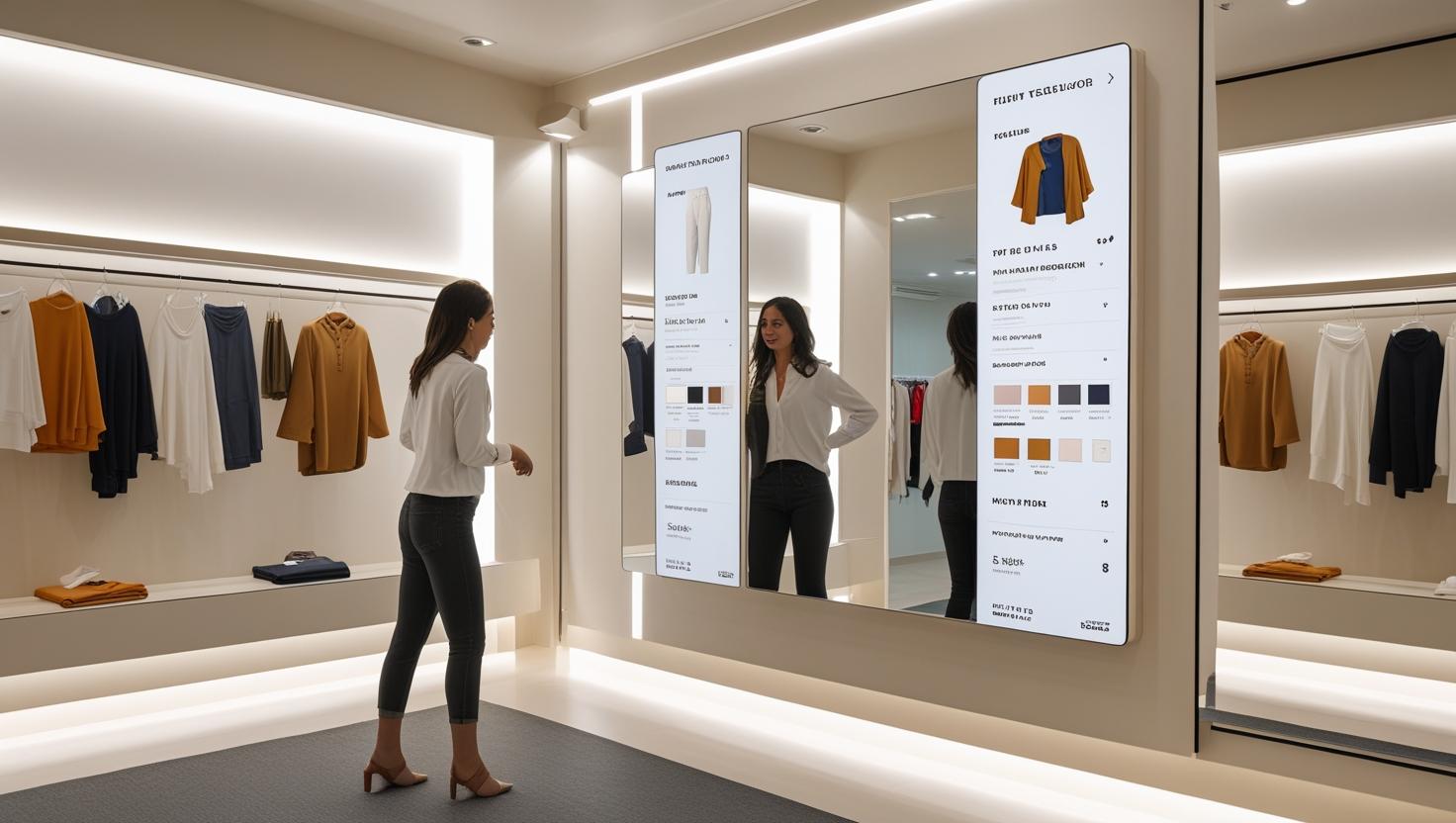
Nobody has to get half-dressed to find a size.
The screen recognises the garments the moment they come in, then acts as the shopper's assistant for the whole visit.
What went in, what came out.
Fitting rooms are where most shrink happens, and where you're least able to watch. Pairing tag reads with a presence sensor gives you the answer without watching anyone.
Entry and exit reconciliation
Tags counted in, tags counted out. The difference is the only thing that raises a flag.
Presence removes false alarms
An empty room reading tags differently isn't an incident. The sensor tells the system whether anyone was ever there.
Checked against the POS
An item that left the room and was paid for closes itself out. Only genuinely missing stock alerts.
Tag stripping caught
A tag that stops moving while the room empties is its own signal.
Alerts a floor associate can actually act on.
Not a siren. A quiet message with the room, the SKU and the time — so someone can offer help at the door rather than accuse anyone.
The system reports a stock discrepancy. Judgement about what happened stays with your people.
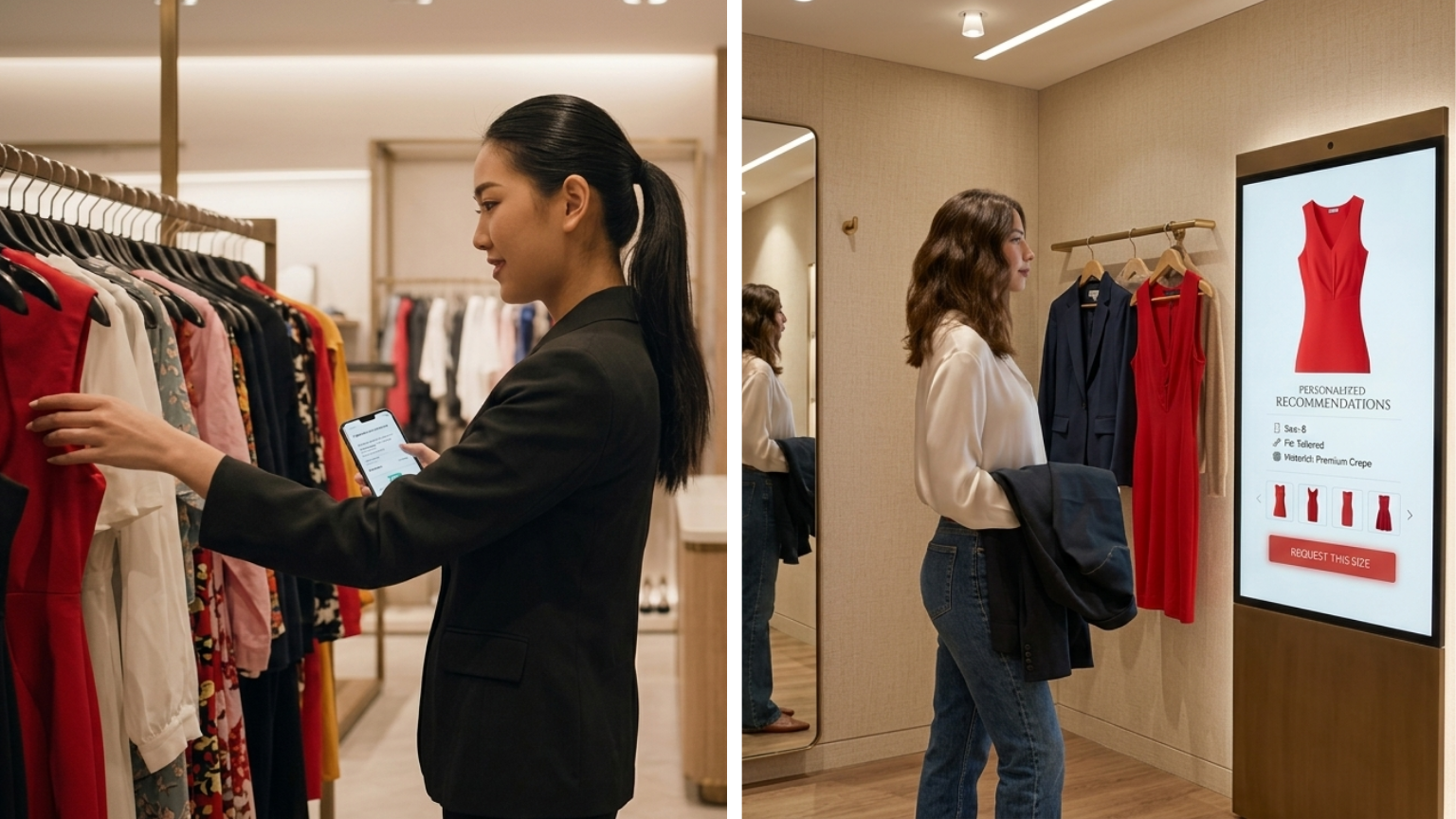
Shrink you can finally put a number on.
Most stores discover fitting-room loss at stocktake, months later. This reports it the same day, by room, by item and by hour.
Loss by item
Which SKUs disappear repeatedly — usually a small, high-value list.
Loss by room and hour
Patterns by time of day and which rooms sit out of staff sightlines.
Loss by location
Compare stores across the group and see where the problem actually is.
Evidence for decisions
Numbers to justify staffing, fixture changes or moving a rail — not a hunch.

The data your POS can't give you.
A till records what sold. The fitting room records what was wanted — and that gap is where merchandising decisions live.
Questions we get asked.
Is there really no camera?
None in the fitting room. Detection is RFID tag reads plus a presence sensor that reports occupied or empty. There is no lens, no image and no recording.
What does the presence sensor actually detect?
Whether a person is in the room. It doesn't identify, count features or produce an image — it's a yes or no, used to time the entry and exit reads correctly.
Does an alert accuse someone of theft?
No. It reports that an item entered a room and didn't leave it or reach the POS. What happens next is a staff decision, and we'd recommend a service-first approach at the door.
Do we need to tag everything?
Only what you want tracked. Many retailers start with high-value lines and expand once the reporting proves itself.
Does it work with our existing RFID?
If you're already tagging for inventory, the tags you have are usually the tags we read. We'll confirm frequency and tag type before quoting.
Can we run this across multiple stores?
Yes — rooms group by store and region, with alerts routed locally and reporting rolled up centrally.
Better service in the room. Less stock out the door.
Tell us how your fitting rooms are laid out and we'll show you what the reads would look like in your store.