

Online advertising, once the darling of the marketing world, is facing a significant challenge: declining effectiveness driven by phenomena like ad fatigue and banner blindness. As consumers are bombarded with an ever-increasing volume of digital advertisements, they are becoming adept at tuning them out, either consciously or unconsciously. This “ad blindness” renders many online campaigns less impactful, leading to lower click-through rates and diminished return on investment for advertisers. Simultaneously, in-store digital advertising is experiencing a resurgence, offering a more engaging and contextually relevant way to reach consumers at the point of purchase. Retailr AI is emerging as a key technology to enhance the effectiveness of both online and in-store advertising in this evolving landscape.
Ad Fatigue and Banner Blindness: Diminishing Online Ad Returns
The sheer volume of online ads has led to a state of ad fatigue, where consumers become weary of repetitive messaging and intrusive formats. This overexposure results in decreased engagement and a higher likelihood of ads being ignored. Closely related is banner blindness, a psychological phenomenon where users instinctively ignore banner-like information on websites, perceiving it as irrelevant clutter. Studies have shown that users’ eyes tend to follow an “F” pattern when scanning web pages, often skipping the areas where banner ads are traditionally placed.
Several factors contribute to these issues:
- Information Overload: The sheer density of ads on many websites overwhelms users, making it difficult to process and engage with individual advertisements.
- Irrelevance: Generic or poorly targeted ads that do not resonate with a user's interests or needs are quickly disregarded.
- Predictable Placement: Standard ad positions become predictable, allowing users to easily avoid them..
- Intrusive Formats: Pop-ups, auto-playing videos, and other disruptive ad formats create negative user experiences, reinforcing the desire to ignore ads.
- Repetitive Messaging:Seeing the same ad repeatedly leads to boredom and annoyance, significantly reducing its impact.
This diminished effectiveness of online ads is a growing concern for businesses relying heavily on digital marketing channels
In contrast to the challenges faced by online advertising, in-store digital advertising is experiencing a significant boom. This growth is driven by the ability to engage shoppers in a physical environment, closer to the point where purchasing decisions are made. In-store digital displays, kiosks, smart shelves, and other digital touchpoints offer several advantages:
The Boom in In-Store Digital Ads: Reaching Consumers at the Point of Decision

Advantages of in-store digital advertising:
- Contextual Relevance: Ads can be tailored to the specific location within the store, the products nearby, and even the time of day, making them highly relevant to the shopper's current mindset and needs..
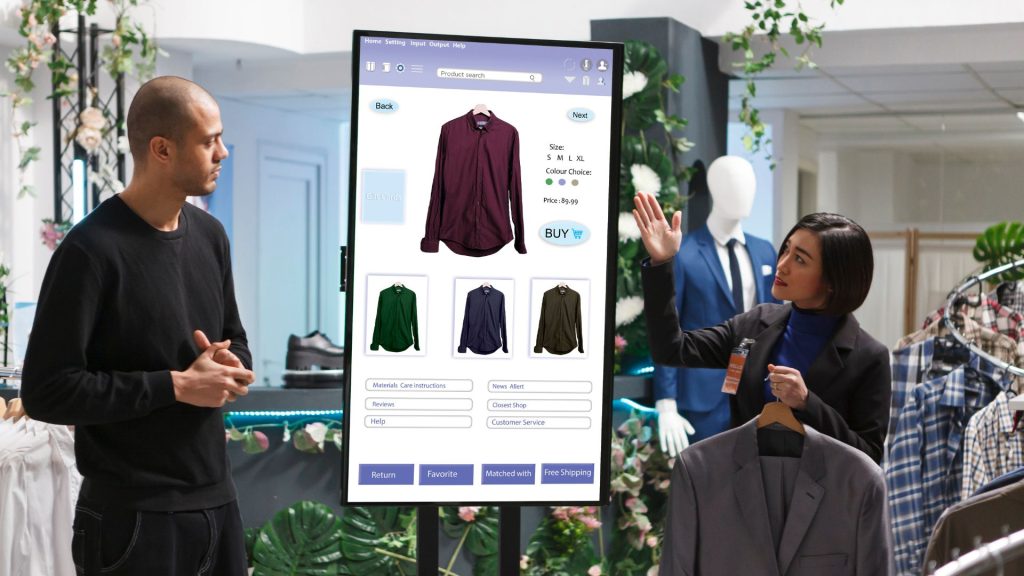
- Enhanced Engagement:Interactive displays, dynamic content, and multimedia experiences capture attention more effectively than static online banners
- Influence at the Point of Purchaset:Reaching consumers while they are actively browsing and making decisions can directly impact sales.
- Bridging the Online and Offline Gap:In-store digital media can connect physical browsing with online information, reviews, and promotions through QR codes and integrated mobile experiences.
- Valuable First-Party Data:In-store interactions provide retailers with rich data about customer behavior and preferences in a physical setting, complementing online data.
This allows retailers and brands to create a more immersive and persuasive shopping experience.
Retailr AI: A Catalyst for More Effective Advertising
Retailr AI plays a crucial role in addressing the challenges of online ad ineffectiveness and amplifying the potential of in-store digital advertising. By leveraging the power of data and machine learning, AI can significantly improve targeting, personalization, and optimization across both channels.
How Retailr AI enhances online advertising:
- Advanced Audience Segmentation and Targeting: AI can analyze vast datasets to identify highly specific customer segments based on demographics, purchase history, browsing behavior, and even predictive analytics of future intent. This allows for much more precise targeting, ensuring online ads are shown to those most likely to be interested, combating irrelevance and fatigue.
- Dynamic Creative Optimization (DCO):AI can generate multiple variations of an ad creative and automatically test and optimize which versions perform best for different audience segments in real-time. This keeps online ads fresh and engaging, reducing ad fatigue.
- Predictive Analytics for Campaign Optimization: AI can predict campaign performance and automatically adjust bidding, budget allocation, and ad placement across various online channels to maximize ROI.
- Personalized Recommendations:AI can power personalized product recommendations in online ads, increasing their relevance and appeal to individual shoppers.
How Retailr AI enhances in-store digital advertising:
- Real-Time Content Personalization: AI can dynamically change the content displayed on in-store screens based on factors like foot traffic, demographics of nearby shoppers (while respecting privacy), local weather, inventory levels, and even real-time sales data. For example, an ad for umbrellas might appear on screens near the entrance if it starts raining.
- <bOptimized Product Placement and Promotions: AI can analyze in-store traffic patterns and sales data to inform the best placement of digital displays and the most effective products to promote at specific locations and times.
- Interactive and Engaging Experiences: AI can power interactive kiosks and displays that offer personalized product information, guided selling, and engaging experiences based on shopper input.
- Inventory-Aware Advertising: AI can dynamically change the content displayed on in-store screens based on factors like foot traffic, demographics of nearby shoppers (while respecting privacy), local weather, inventory levels, and even real-time sales data. For example, an ad for umbrellas might appear on screens near the entrance if it starts raining.
- Measurement and Attribution:AI can help bridge the gap between in-store ad exposure and actual sales, providing better measurement of the effectiveness of in-store digital campaigns.
Conclusion: A New Era of Intelligent Advertising
In conclusion, while online ads grapple with the challenges of ad fatigue and banner blindness, in-store digital advertising is thriving by offering contextually relevant and engaging experiences at the point of purchase. Retailr AI is a transformative force that can revitalize online advertising through intelligent targeting and personalization and unlock the full potential of in-store digital media by creating dynamic, relevant, and measurable customer interactions. By leveraging AI, retailers can create a more seamless, personalized, and effective advertising ecosystem that captures consumer attention both online and in the physical store.

